
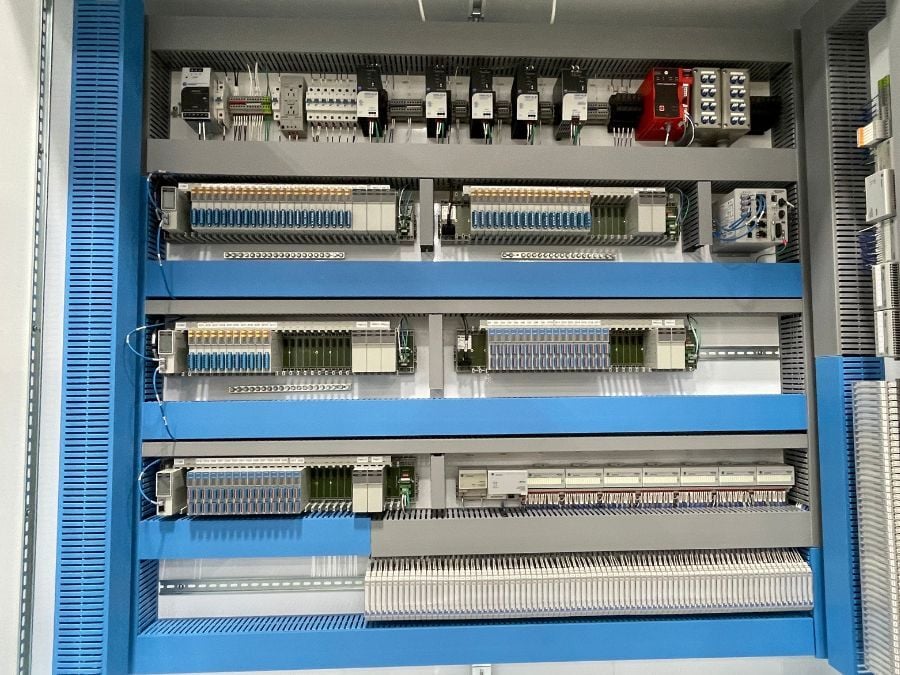
Choosing a UL 508A panel shop is a decision that follows a project long after the purchase order is signed. The right partner helps a control panel pass inspection the first time, install without surprises and hold up through years of operation. The wrong one can turn a routine build into a source of schedule risk, field rework and compliance questions that surface at the worst possible time.
A UL 508A panel shop is about more than assembling components inside a cabinet. It requires understanding compliance, documentation, component selection, labeling and repeatable testing well enough to build panels that are easier to install, inspect, troubleshoot and maintain once they reach the field.
Value Is Realized When Power Is Controlled Safely and Delivered Reliably
That idea sits behind every good panel-shop decision. A panel that is UL 508A listed, properly documented and built to a consistent standard reduces the number of things that can go wrong between the shop floor and startup day. That is the outcome project teams should be evaluating for, not just price per panel.
Quick Answer: What Is UL 508A?
UL 508A is the UL standard covering industrial control panels intended for general industrial use, operating at 1,000 volts or less. It defines how panels should be constructed, labeled and evaluated so they can be installed safely under the National Electrical Code (NEC/NFPA 70). A shop that is authorized to build to UL 508A follows defined construction, component and documentation requirements, and its panels carry a UL mark once they meet those requirements.
Why Panel Projects Win or Lose
Most panel problems are not discovered in the shop. They surface during inspection, installation or the first weeks of operation, and by then they cost far more to fix. The practical factors that separate a smooth panel project from a difficult one include:
- Whether the shop is authorized to build UL 508A panels, or is representing general fabrication as certified work
- How clearly SCCR (short-circuit current rating) is calculated and documented
- Whether wire labeling, device labeling and nameplates follow a consistent, legible standard
- The quality of electrical drawings and as-built documentation delivered with the panel
- Whether functional and continuity testing happens before the panel ships, not after it arrives
- Whether components are selected for the actual voltage, load and environment, not a generic catalog spec
- How the shop handles revisions, substitutions and customer approvals mid-build
What to Verify Before You Choose a Panel Shop
Authorization and Certification
Confirm the shop holds current authorization to build UL 508A industrial control panels, not just general electrical assembly capability. Ask whether they also support UL 698A intrinsically safe applications, UL 98B disconnect switches or cUL labeling, since these capabilities matter if your application crosses into hazardous locations or ships into Canada. Certification requirements should always be confirmed for the specific product and end-use application; not every panel needs every listing.
SCCR Documentation
A panel’s short-circuit current rating has to match the fault current available at its installation point. Ask how the shop determines and documents SCCR, whether through component ratings, series ratings or engineering analysis, and make sure that documentation ships with the panel, not just the invoice.
Labeling, Drawings and As-Built Documentation
Clear wire numbers, device tags and nameplates make a panel easier to commission and far easier to troubleshoot years later. The same goes for drawings: a shop that delivers clean, accurate as-built documentation is giving your maintenance team a tool, not just paperwork to file away.
Pre-Shipment Testing
Ask whether the shop performs continuity testing, functional testing and other inspections before the panel leaves the building. A panel that has been exercised on the bench, not just visually inspected, is far less likely to generate a field call in week one.
Component Selection for the Real Application
Generic component selection is a common source of field problems. A shop that asks about ambient temperature, duty cycle, available fault current and enclosure environment before specifying parts is protecting your schedule, not just filling a bill of materials.
Build-to-Print or Design Engineer Manufacture
Some projects arrive as a released design ready to build. Others need engineering support from concept forward. Confirm whether the shop can support both build-to-print contract manufacturing and ASG Power’s integrated Design Engineer Manufacture approach, where engineering and manufacturing work under one roof to reduce handoffs and improve manufacturability. Knowing which model fits your project, and confirming the shop can execute it, avoids mismatched expectations later.
Consistency and Communication
Look for consistency in layout, wiring practices and production processes from one panel to the next, and ask how the shop handles revisions, substitutions and approvals. A partner who communicates clearly during the build is the one who helps you catch problems before the panel reaches the field, not after.
What ASG Power Delivers
ASG Power designs and manufactures UL 508A control panels and custom control cabinets, with UL 698A options and both open and enclosed formats. Open panels are a good fit for retrofit applications where enclosure space is constrained. ASG can also build and label projects to meet cUL requirements when Canadian compliance applies, confirming the required listing during the design phase to align with the project’s Authority Having Jurisdiction (AHJ).
Typical applications include industrial automation, water and wastewater treatment, manufacturing test stands, field upgrades and retrofits, AC/DC drive systems, instrumentation controls, data centers, cooling solution controls, utility metering cabinets and energy management systems.
Compliance and Certifications
ASG Power operates UL-certified manufacturing processes for applicable products, including UL 508A control panels, UL 698A intrinsically safe applications and UL 98B disconnect switches, with cUL labeling available when required. ASG also maintains ISO 9001:2015 certification for defined manufacturing processes, and its technicians are certified to IPC/WHMA-A-620 workmanship standards for cable and wire harness assemblies. Certification requirements should always be confirmed for the specific product and application.
Why ASG Power
✅ Reduce field risk: Panels are built, labeled and tested in a controlled environment before they ever reach the site.
✅ Support compliance: UL 508A, UL 698A and UL 98B capabilities help match the panel to the application, with cUL labeling available when needed.
✅ Improve documentation quality: Consistent drawings, SCCR documentation and as-built records make installation and maintenance easier.
✅ Adapt to project change: Design Engineer Manufacture and in-house manufacturing support evolving specs without adding vendor handoffs.
ASG Power assembles panels at its Rocky Hill, Connecticut facility, backed by more than two decades of electrical manufacturing experience and a quality system built around inspection, testing and traceability.
Key Takeaways
- A UL 508A panel shop should be evaluated on authorization, documentation and testing discipline, not price alone.
- SCCR calculations, labeling standards and as-built drawings directly affect how easily a panel installs and holds up in the field.
- Pre-shipment functional testing catches problems before they become schedule risk.
- Confirm whether a shop supports build-to-print work, Design Engineer Manufacture, or both, depending on how far along your design is.
- Certification claims should always be matched to the specific product and application.
FAQ
What does UL 508A cover?
UL 508A covers industrial control panels operating at 1,000 volts or less, intended for general industrial use in ordinary locations under the National Electrical Code.
What is SCCR, and why does it matter for a control panel?
SCCR (short-circuit current rating) is the maximum fault current a panel is rated to withstand without failing dangerously. It must be equal to or greater than the available fault current at the installation point, so it should always be documented and verified before installation.
Is a “UL listed” panel automatically UL 508A compliant?
Not necessarily. UL covers many product categories. Confirm specifically that the panel was built under UL 508A requirements for industrial control panels, and that the shop is authorized to build to that standard.
What’s the difference between build-to-print and Design Engineer Manufacture?
Build-to-print work starts from an already-released design package. Design Engineer Manufacture is an integrated model where engineering and manufacturing work together from early in the project, helping translate requirements into a build-ready design and reduce handoffs.
How long does a custom UL 508A panel typically take to quote and build?
Timelines vary by complexity and component availability. Ask any shop for a project-specific estimate rather than relying on a generic industry average.
Talk to an Expert
Choosing a panel shop is easier when you know exactly what to verify. Talk to an Expert at ASG Power about your UL 508A control panel requirements and see how a Design Engineer Manufacture approach can help reduce field risk on your next project.
