
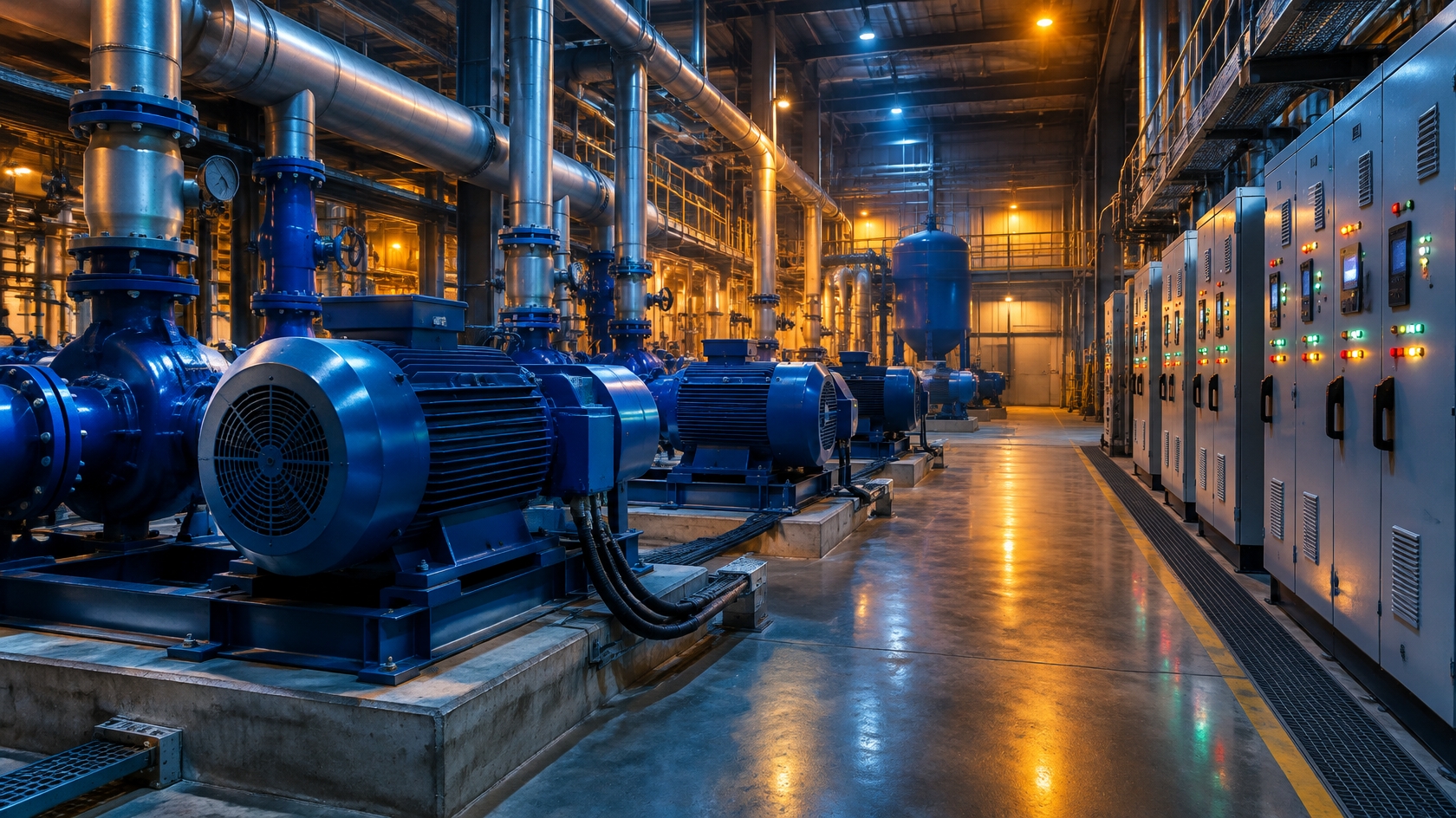
Standard electrical panels weren't built for your facility. They were built for everyone's facility. That gap costs manufacturers time, money and operational reliability every single day.
Introduction
Custom electrical control panels are purpose-built assemblies designed to match the exact machinery, workflows and safety requirements of a specific facility. Unlike off-the-shelf alternatives, they integrate components such as PLCs, HMIs, circuit breakers, relays and variable frequency drives into a single, coherent system.
The key benefits of custom electrical control panels go well beyond aesthetics or preference. They directly affect uptime, energy costs, compliance and long-term scalability. Facilities operating on mismatched standard panels face compounding risks as industrial electricity consumption, automation demands and compliance requirements all intensify in 2026.
What Is a Custom Electrical Control Panel?
A custom electrical control panel is an engineered assembly tailored to a facility's specific power and control requirements. The National Electric Code (NEC) Section 409.2 defines it as "an assembly of two or more power circuit components, control circuit components, or any combination of power and control circuit components." Every element is selected and arranged to serve your application, not a generic one.
Key components typically include:
- Programmable Logic Controllers (PLCs): Manage automated sequences and process logic specific to your equipment
- Human Machine Interfaces (HMIs): Provide operators with real-time visibility and control over system status
- Circuit breakers and relays: Deliver overcurrent protection matched to your actual load requirements
- Motor starters and VFDs: Control motor speed and torque to match process demands precisely
- Communications infrastructure: Enables integration with SCADA systems and IoT monitoring platforms
According to The Business Research Company, the global electric control panel market was valued at USD $6.15 billion in 2025 and is projected to reach $8.39 billion by 2030, driven by factory automation growth.
Why Custom Electrical Control Panels Matter for US Facilities
The U.S. market for control panels sits between $4.8 billion and $5.5 billion, with custom Engineer-to-Order panels accounting for approximately 35-40% of total demand. Reshoring trends, grid investment and rising electricity consumption are all pushing facilities toward purpose-built electrical solutions.
Core Functions Every Control Panel Must Deliver
Every control panel, custom or standard, must protect equipment, manage power distribution and support safe operator interaction. Custom panels go further. They're engineered to match your specific voltage requirements, load profiles and communication protocols from day one. This alignment reduces commissioning time, eliminates workarounds and supports cleaner documentation for field teams and compliance inspectors.
ASG Power's Design Engineer Manufacture process ensures that design intent carries through to the finished panel, reducing the scope gaps that create problems during startup and inspection.
Where Standard Panels Fall Short
Standard panels are built to cover common applications. They aren't built for yours. U.S. industrial electricity consumption is forecast to increase 3.8% in 2026, compared to just 1% growth in 2024, driven by manufacturing expansion and AI data center load. Standard panels weren't sized or configured for that growth. Custom panels are designed with your current load and your future capacity in mind.
Custom Design for Enhanced Operational Efficiency
Purpose-built panels eliminate the mismatched components and redundant wiring that drag down performance in standard installations. The key benefits of custom electrical control panels in this area are measurable and well-documented.
Efficiency Gains from Purpose-Built Wiring
A 2025 peer-reviewed study on PLC/SCADA-based smart energy management demonstrated a 28% reduction in total energy consumption and a 63% reduction in unplanned downtime in manufacturing plants. Custom panels make those results achievable by integrating the right components in the right configuration.
Efficiency gains from purpose-built design include:
- Streamlined wiring layouts: Reduce heat buildup, simplify troubleshooting and shorten commissioning time
- Matched overcurrent protection: Sized to actual loads rather than worst-case generic assumptions
- Integrated VFDs: Can reduce motor energy consumption by 30-50% for pump, fan and compressor applications, per ABB Energy Efficiency data
- IoT-ready architecture: In 2024, 45% of newly installed control panels contained IoT-enabled devices supporting real-time monitoring, according to Drives & Systems
- Predictive maintenance support: Facilities using AI-driven predictive maintenance report a 30-50% reduction in unplanned downtime, per McKinsey benchmarks cited by IIoT World
Scalability and Future-Proofing Your Electrical Infrastructure
Aging infrastructure is one of the most pressing risks in U.S. manufacturing today. The average age of industrial fixed assets is now 24 years, the oldest in nearly 70 years, according to MaintainX. Custom panels are designed to grow with your facility rather than constrain it.
How Custom Panels Support Long-Term Scalability
Custom panels can be engineered with expansion capacity built in. Modular and pre-wired panel formats are growing at an estimated 7-10% annually and are projected to represent over 60% of OEM panel demand by 2035, up from approximately 40% in 2025, according to IndexBox.
Scalability features that custom panels can support include:
- Reserved breaker slots and bus capacity: Allow load additions without full panel replacement
- Modular sub-panel architecture: Supports phased expansion aligned to production growth
- Smart panel readiness: By 2035, smart panels with IoT and remote monitoring are expected to exceed 30% of new installations, up from 15% in 2025
- Retrofit-friendly design: Upgrading existing systems with smarter control infrastructure cuts project costs by 60-80% compared to full replacement, per Craftautomation
- Standards alignment: Panels built to current UL 508A requirements avoid costly rework as compliance expectations evolve
ASG Power's skidded and E-House solutions extend this scalability into pre-assembled, field-ready formats that reduce onsite labor and shorten installation timelines.
Benefits of Upgrading to a Custom Electrical Control Panel
The financial case for upgrading is clear. Equipment failure is the leading cause of unplanned downtime, accounting for 42% of all industrial incidents, and 80% of electrical disturbances originate inside facilities themselves, generated by the facility's own VFDs and heavy motors. Standard panels aren't engineered to manage those internal disturbances. Custom panels are.
Reliability and Compliance Benefits
"61% of manufacturers suffered unplanned downtime in the past year, costing the sector up to $852 million every week globally." - Fluke Corporation
Custom panels address the root causes of that exposure. Reliability and compliance benefits include:
- UL 508A certification: The standard was significantly revised on June 26, 2025, per Intertek, with updates to control circuit voltage limits and emergency stop requirements
- Reduced failure risk: Components are selected and tested together, eliminating the compatibility gaps that cause field failures
- Traceability and documentation: Custom builds include detailed drawings and BOMs that support AHJ inspections and field service
- Predictive maintenance integration: Upgrading from reactive to predictive maintenance reduces unplanned downtime by 25-30% and extends asset life by 20%, per IIoT World
- Standards-driven quality: ASG Power's UL 508A-certified manufacturing supports compliance from design through delivery
Over 70% of industrial customers now request application-specific panel configurations, according to Market Reports World, signaling broad recognition that custom solutions outperform off-the-shelf alternatives in demanding environments.
Conclusion
Custom electrical control panels deliver measurable advantages that standard alternatives can't match for facilities with specific load profiles, compliance requirements and growth plans. The combination of purpose-built design, integrated controls and standards-driven manufacturing creates a foundation for safer operation, better uptime and long-term performance.
For U.S. facilities navigating rising electricity demand, aging infrastructure and evolving compliance standards, investing in custom power and control solutions is increasingly a practical necessity. ASG Power supports that work through its Design Engineer Manufacture process, from initial design through in-house build, testing and field-ready delivery.
Frequently Asked Questions
How much does a custom electrical control panel cost in the United States?
Custom panel pricing varies based on complexity, component selection and certification requirements. Simple custom panels may start in the low thousands, while complex multi-section assemblies for industrial applications can reach six figures. Custom Engineer-to-Order builds command 35-50% gross margins compared to 15-25% for standard OEM builds, reflecting the engineering depth and risk reduction they provide. Early engagement with your panel builder helps control costs through design-for-manufacturability decisions.
Which U.S. industries benefit most from custom electrical control panels?
Custom panels serve a broad range of U.S. industries, including manufacturing, food and beverage, chemicals, automotive, power generation, pharmaceuticals, oil and gas, and aerospace and defense. The oil and gas segment is projected to grow at the fastest rate through the current forecast period, according to Custom Market Insights. Facilities in regulated industries benefit most from the traceability, documentation and standards-aligned construction that custom panels provide.
How long does a custom electrical control panel last?
Most industrial control panels last between 15 and 30 years depending on maintenance practices and operating conditions. Component lifespans vary: power supplies typically last 10-15 years, HMIs 8-12 years, and relays and contactors 5-10 years, according to Industrial Monitor Direct. Periodic panel audits help identify components approaching end of life before they cause unplanned downtime.
How do custom panels compare to standard panels for compliance?
Standard panels are built to general specifications and may require field modifications to meet site-specific AHJ requirements. Custom panels are engineered to applicable standards from the start, including UL 508A, which underwent significant revision in June 2025. Replacement and lifecycle services account for approximately 50-55% of annual procurement value in the control panel market, per IndexBox, largely because aging panels fall out of compliance with updated standards.
What does implementation look like when upgrading to a custom panel?
Standard panels typically deliver in 2-4 weeks, while custom panels run 4-6 weeks depending on design complexity and approval cycles, according to Covenant Panel Works. Critical component shortages for embedded controllers and power semiconductors are running 20-40 week lead times in 2025-2026, making early project planning essential. ASG Power's Design Engineer Manufacture process aligns engineering, procurement and build execution to keep projects on schedule from kickoff through delivery.
